
Table of Contents
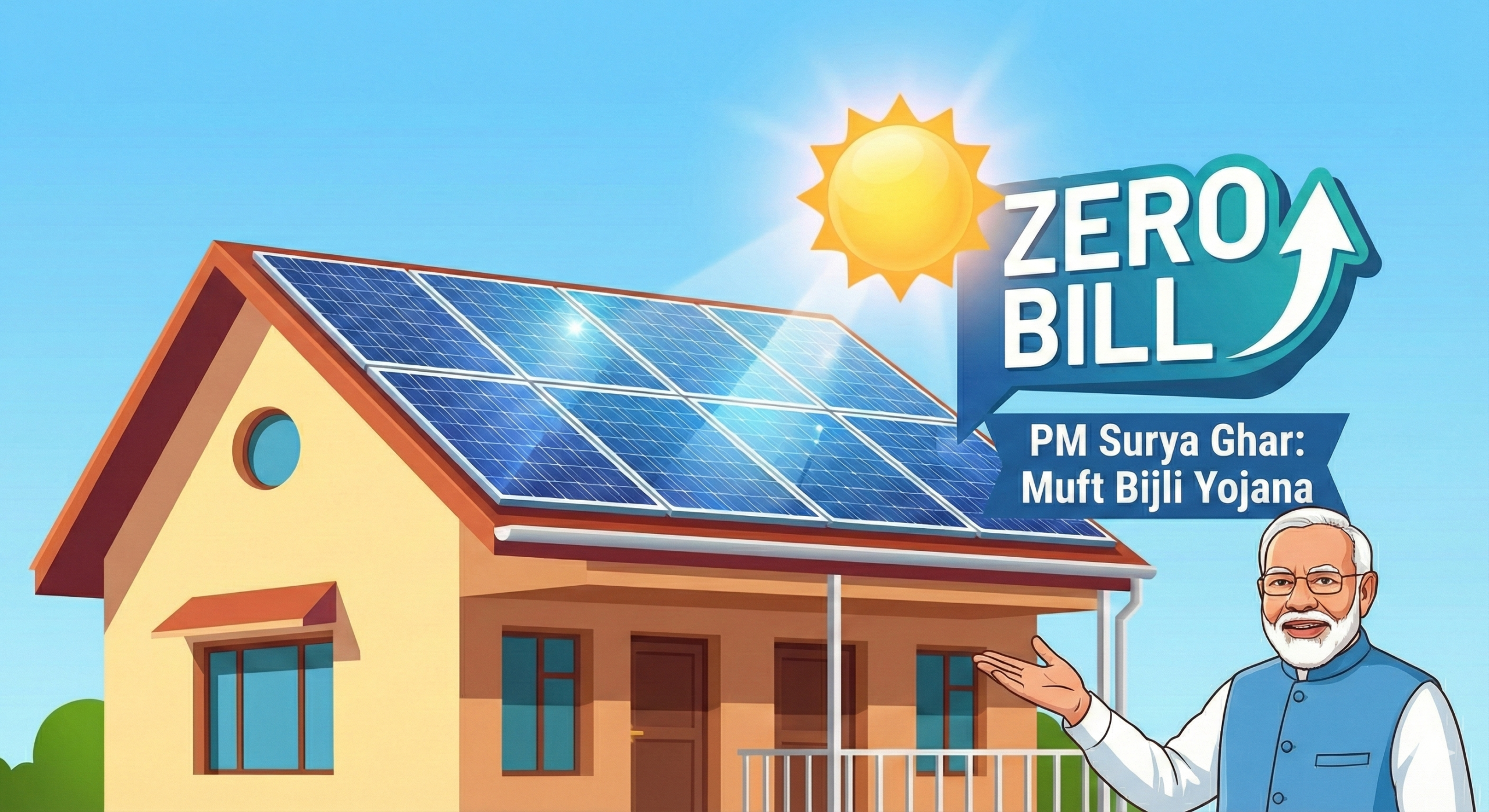
The promise is massive: Zero electricity bills for life and a government subsidy of up to ₹78,000 credited directly to your bank account. As of early 2026, the PM Surya Ghar Muft Bijli Yojana has already facilitated over 10 lakh installations, but the target is much higher—1 crore households by 2027. If you are tired of rising energy tariffs, this is arguably the most significant fiscal transfer the Central Government is offering the middle class right now. But is it truly “free,” or are there hidden implementation hurdles?
Key Takeaways (TL;DR)
- The Benefit: You get 300 units of “free” electricity monthly by generating it yourself; surplus power can be sold back to the grid.
- The Subsidy: The government pays roughly 60% of the cost for a 2kW system (approx. ₹60,000 subsidy).
- The Loan: Collateral-free loans are available at interest rates around 7% (significantly lower than personal loans).
What Has Been Announced (Confirmed vs. Pending)
Unlike many “announced” schemes that languish in draft files, this scheme is fully implemented and active. Launched in February 2024, it subsumed the older Rooftop Solar Phase II programme.
- Confirmed: The Ministry of New and Renewable Energy (MNRE) has finalized the subsidy structure and vendor empanelment. The [suspicious link removed] is live for applications.
- Pending/Variable: State-level execution varies. While the Centre provides the subsidy (CFA), the speed of net-meter installation depends entirely on your local DISCOM (Distribution Company).
- New for 2025-26: The government has introduced the “Model Solar Village” component, allocating ₹1 crore per district to create a fully solar-powered village, though this affects communities rather than individual applicants.
Who Is Eligible — and Who Is Not
Don’t assume you qualify just because you pay an electricity bill. The criteria are specific.
You Are Eligible If:
- Indian Citizen: You must possess a valid Aadhaar.
- Property Owner: You must own the house with a suitable roof (concrete/pucca roof preferred). The roof must have clear access to sunlight, free from shadows of nearby buildings or trees.
- Grid Connection: You must have a valid electricity connection with the local DISCOM.
- No Prior Subsidy: You must not have availed any previous government subsidy for solar panels.
You Are NOT Eligible If:
- You live in a rented apartment (unless the landlord applies).
- You live in a high-rise without exclusive roof rights (though your RWA can apply for common areas).
- Your roof is made of asbestos or weak temporary materials (vendors will reject the installation for safety).
Benefits Explained Simply
The core benefit is financial assistance to lower the upfront cost of installing solar panels (Capex).
The Math (Approximate for 2026):
| System Capacity | Estimated Cost (Pre-Subsidy) | Govt Subsidy (CFA) | Your Net Cost |
| 1 kW | ₹50,000 – ₹60,000 | ₹30,000 | ₹20,000 – ₹30,000 |
| 2 kW | ₹1,00,000 – ₹1,10,000 | ₹60,000 | ₹40,000 – ₹50,000 |
| 3 kW+ | ₹1,45,000+ | ₹78,000 (Fixed Cap) | ₹67,000+ |
Note: The subsidy is capped at 3 kW. You can install a 10 kW system if you want, but the government will only pay ₹78,000.
The “Free Electricity” Part:
A 3 kW system generates roughly 300-360 units per month. If your household consumption is 300 units, your bill effectively becomes zero (minus fixed meter charges). If you use less, the surplus flows back to the grid, and the DISCOM credits your account.
Comparison: Old Scheme vs. PM Surya Ghar
| Feature | Old Phase II Scheme | PM Surya Ghar (New) |
| Subsidy Amount | ~40% for 3kW | Higher fixed amounts (up to 60% for 2kW) |
| Process | Complex, often offline paperwork | Fully Digital (National Portal) |
| Loan Access | High interest / Personal loans | Low interest (~7%), collateral-free |
| Vendor Choice | Limited to few state vendors | Open market (Empaneled vendors on portal) |
The Skeptic’s View
“Most people think the government installs the panels for free. They don’t.”
As a policy analyst, I must highlight the friction points that official brochures ignore:
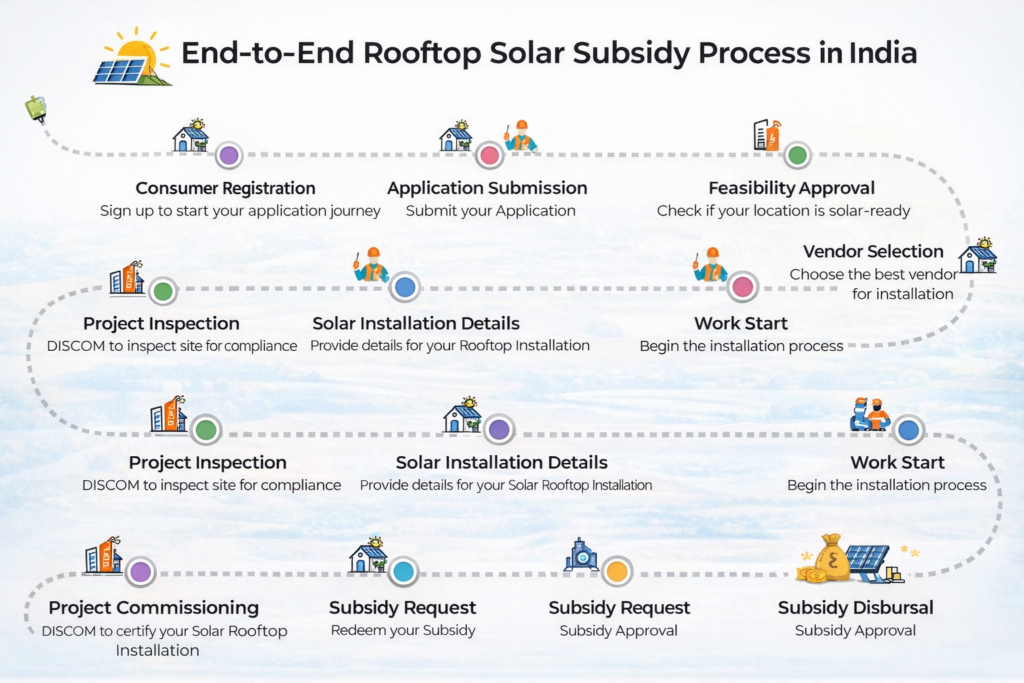
- Upfront Payment Risk: You often have to pay the full amount to the vendor first. The subsidy is credited to your bank account only after the system is installed and inspected by the DISCOM. If the inspection is delayed, your money is stuck.
- The “Net Meter” Bottleneck: Installing panels is easy; getting the Net Meter (which records export/import of power) is hard. Local electricity boards are often slow, understaffed, or resistant to losing paying customers.
- Vendor Quality: With thousands of new vendors rushing in to cash in on the scheme, workmanship quality varies. A poorly installed system can cause roof leaks or fire hazards.
- Shadow Analysis: Many users install panels without a proper shadow analysis. If a neighbor builds a new floor next year that blocks your sun, your investment yields zero return.
My Take
I view the PM Surya Ghar Muft Bijli Yojana as a “triple-win” policy—good for the grid, good for the planet, and excellent for the middle-class wallet.
However, patience is your currency here. Do not expect this to be like ordering groceries. It involves construction, electrical approvals, and government inspections. The 7% loan interest is a game-changer; it essentially means your monthly electricity savings can pay off the loan EMI.
My advice: If you have a south-facing roof and consume over 200 units a month, this is a financial no-brainer. The Return on Investment (ROI) is typically 3-4 years. After that, your power is essentially free for the next 20 years.
What Should You Do Now?
- Check Your Bill: Look at your average monthly units. If it’s below 100 units, the upfront cost might not be worth it. If it’s 200+, proceed.
- Register: Go to [suspicious link removed], select your state and electricity provider, and register with your Consumer Number.
- Site Survey: Don’t just pick the first vendor. Call 3 empaneled vendors from the portal. Ask for a “shadow analysis report” before paying a rupee.
Sources & References
- Ministry Notification (MNRE): Guidelines for PM-Surya Ghar
- PIB Release (Status Update): PM Surya Ghar Installations Cross 10 Lakh
- Drishti IAS Analysis: Scheme Overview & Updates
Disclaimer
This article is for informational purposes only. Subsidy amounts and loan interest rates are subject to change by government notification. Always verify details on the official portal before making financial commitments.